
Table of Contents
- Why Sauna and Cold Plunge Benefits Are Having a Moment in 2026
- 7 Research-Backed Sauna and Cold Plunge Benefits
- Sauna to Cold Plunge Order: What Sequence Works Best
- How Often to Sauna and Cold Plunge for Real Results
- Cold Plunge Duration: How Long Is Long Enough
- Cold Plunge After Workout: Timing, Trade-Offs, and Strength Gains
- Evidence Gaps, Safety Precautions, and Who Should Skip It
- Frequently Asked Questions
Last Updated: October 12, 2026
Why Sauna and Cold Plunge Benefits Are Having a Moment in 2026
Sauna and cold plunge benefits in 2026 come down to one idea: controlled temperature stress makes the body adapt.
The draw is simple. The American Heart Association’s physical activity guidance makes the broader point clearly: the cardiovascular system responds well to repeated, manageable stress, and temperature exposure is one more lever you can pull.
Below, we break down seven research-backed benefits, the right sequence, realistic frequency, and who should skip it entirely.
The core mechanism behind sauna and cold plunge benefits is hormesis: a brief, controlled stressor that triggers adaptation. Heat and cold push the body in opposite directions, and that contrast is the point.
7 Research-Backed Sauna and Cold Plunge Benefits
Seven benefits show up repeatedly in the literature, and they cluster around four systems: your heart, your muscles, your stress response, and your long-term health markers. Here is the list, then the detail.
- Cardiovascular health and circulation
- Muscle soreness and exercise recovery
- Inflammation regulation
- Stress resilience and mood
- Alertness and energy
- Immune function
- Metabolism and longevity signals
Cardiovascular Health and Circulation
Heat therapy raises heart rate and widens blood vessels, a response similar in shape to moderate exercise. Cold-water immersion then triggers vasoconstriction, tightening those vessels and pushing blood back toward the core.
For athletes, that matters beyond the heart. The Cleveland Clinic’s overview of sauna health effects notes that regular sauna use is generally well tolerated by healthy adults and is associated with improved vascular function.
Muscle Soreness and Exercise Recovery
Cold-water immersion is the more studied half of this pairing for soreness. A plunge after intense training constricts blood vessels, which appears to reduce swelling and blunt the inflammatory spike that drives next-day soreness. Sauna does something different: it increases blood flow and helps you relax, which many athletes find makes tight tissue feel looser.
The practical takeaway is that neither tool replaces sleep and protein. They shorten the window where you feel wrecked.
Inflammation and the Body’s Response to Temperature
Inflammation is the immune system’s localized response to tissue damage, and it is not the enemy. The problem is inflammation that never resolves. Heat exposure tends to raise acute inflammatory markers briefly, while cold exposure suppresses them briefly.
That is why contrast therapy shows up in recovery routines for people training several days a week. The goal is not to eliminate inflammation. It is to keep the cycle moving.
Stress Resilience, Mood, and Alertness
Cold shock is uncomfortable, and that is the mechanism. A cold plunge triggers a sharp release of norepinephrine, a neurotransmitter tied to alertness, focus, and mood. Many people report feeling unusually clear-headed for hours afterward.
Stack them and you get a mood and energy swing that feels deliberate rather than accidental. The National Center for Complementary and Integrative Health on mind-body practices outlines how deliberate temperature and breathing practices fit into stress management.
Immune Function, Metabolism, and Longevity
This is the least settled area, and honesty matters here. Observational studies link frequent sauna use to lower cardiovascular and all-cause mortality, but observational data cannot prove cause. On metabolism, heat exposure raises heart rate and metabolic rate temporarily, similar to light exercise, while cold exposure activates brown fat, tissue that burns energy to produce heat.
Treat longevity claims as promising but unproven. The habits that surround contrast therapy, consistent sleep, regular training, lower stress, likely do more of the work than the heat itself.
Sauna to Cold Plunge Order: What Sequence Works Best
The standard sequence is heat first, then cold: sauna for 10-20 minutes, cold plunge for 1-3 minutes, repeated for two to three rounds.
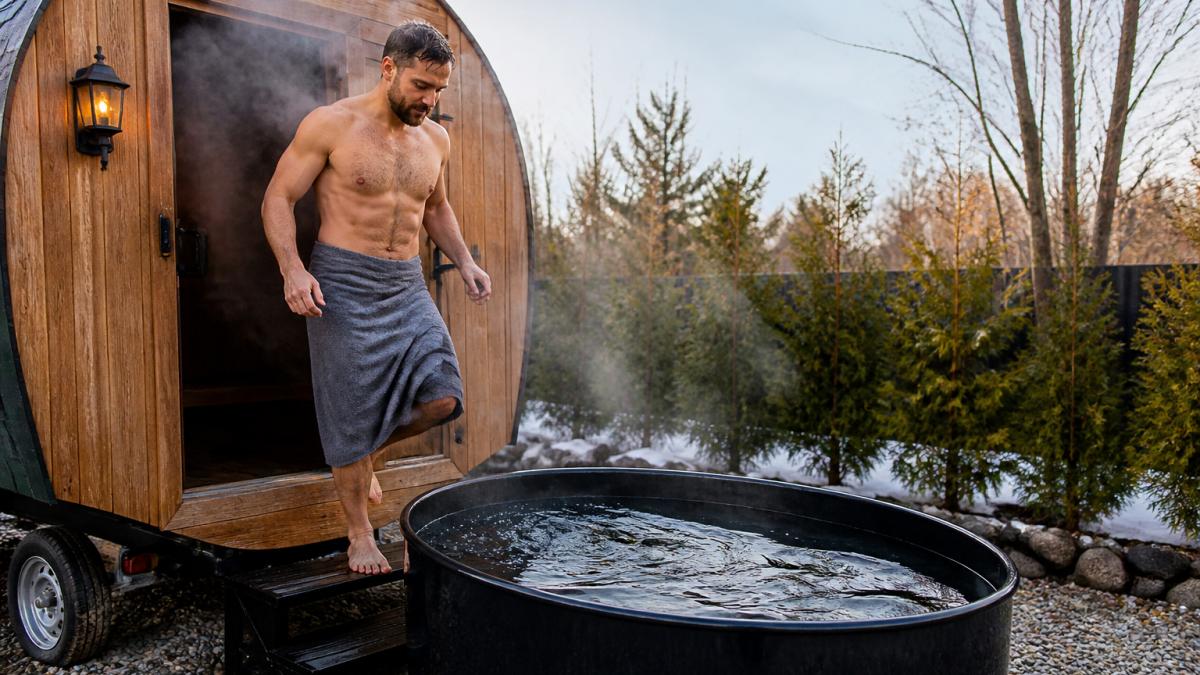
Ending on heat instead promotes relaxation and sleep. Neither order is wrong, but the goal should decide the sequence. If you want to feel wired and ready, finish cold.
If cold feels unbearable, start at the feet. Standing in a cold plunge and letting your lower legs adapt for 20-30 seconds before sitting down dramatically reduces the cold shock response and makes the full plunge far more tolerable.
How Often to Sauna and Cold Plunge for Real Results
Two to four sessions per week is the sweet spot for most people. Frequency matters more than duration: short, consistent sessions beat one long session on the weekend. Beginners should start at twice a week and build.
But frequency alone is not a protocol. The gap in most guides is that they tell you how often without telling you how to structure a session, how long to rest between rounds, or how to know whether it is working.
A Practical Session Structure
A standard contrast session runs two to three rounds. Each round is sauna for 10-20 minutes, then a brief transition of 30-60 seconds to let your heart rate settle, then cold plunge for 1-3 minutes. Rest 2-5 minutes between rounds, or until your breathing is normal and you feel ready to go again. Total session time lands between 30 and 50 minutes including transitions.
| Session Goal | Frequency | Sauna Duration | Cold Duration | Rounds |
|---|---|---|---|---|
| General wellness | 2-3x weekly | 10-15 min | 1-2 min | 2 |
| Athletic recovery | 3-4x weekly | 15-20 min | 2-3 min | 2-3 |
| Sleep and relaxation | 3-5x weekly | 15-20 min | 1 min or skip | 1-2 |
| Strength training day | 2-3x weekly | 15-20 min | Skip or delay | 2 |
Adjusting by Population and Goal
Beginners should treat the first two weeks as acclimation, not optimization. Start with one sauna round and a 30-second cold exposure, then add time and rounds gradually. Endurance athletes can be more aggressive with cold immersion because faster recovery between sessions often outweighs the blunting effect on adaptation. Strength trainees should lean on sauna and delay cold plunge by several hours after lifting.
Tracking Whether It Is Working
There is no blood test for ‘contrast therapy is working.’ The practical approach is to track a handful of subjective and objective measures over four to six weeks and look for trends, not single data points. Useful things to log:
- Perceived soreness on a 1-10 scale, measured at the same time each day
- Sleep quality and time to fall asleep
- Resting heart rate, taken first thing in the morning
A common pattern is that soreness drops and sleep quality improves within two to three weeks, while resting heart rate and performance changes take longer. None of these measures prove long-term health benefits. They tell you whether the routine is tolerable and whether you are recovering well enough to keep training.
Signs You Are Overdoing It
Watch for poor sleep, persistent fatigue, a resting heart rate that stays elevated for more than a day or two, or a growing dread of the session. Any of those is a signal to back off to twice a week. More is not better with temperature stress; the adaptation comes from the recovery between sessions, not the stress itself.
If you are new to cold exposure, do not chase the lowest temperature you can find. A plunge in the 50-59°F range is cold enough to trigger the response. Start at the warmer end, shorten the time, and let your tolerance build over several weeks.
Cold Plunge Duration: How Long Is Long Enough
One to three minutes is enough for most recovery and mood benefits. Longer is not better. Past roughly three minutes, the additional benefit flattens while the discomfort and risk rise, particularly for people new to cold exposure.
Water temperature matters as much as time. A plunge in the 50-59°F range is cold enough to trigger the response without pushing you into genuine cold shock territory.
Cold Plunge After Workout: Timing, Trade-Offs, and Strength Gains
Cold plunge after a workout helps soreness but may blunt muscle growth if you do it immediately after strength training. Cold exposure appears to reduce the inflammatory signals that help muscle adapt and grow.
If your goal is recovery between competitions or you are training for endurance, the trade-off flips. Faster recovery often matters more than maximizing the growth signal from a single session.
Evidence Gaps, Safety Precautions, and Who Should Skip It
The evidence base is real but uneven. Cold-water immersion has solid support for soreness and perceived recovery. Sauna has strong observational data for cardiovascular outcomes. Longevity and immune claims rest mostly on observational studies, which cannot establish cause.
Safety comes first. Skip sauna and cold plunge entirely, or get clearance from a physician, if you have:
- Cardiovascular disease, uncontrolled high blood pressure, or a recent heart event
- Pregnancy
- Raynaud’s phenomenon or poor cold tolerance
Never plunge alone, never drink alcohol before either activity, and never combine cold plunges with breath-holding games. Get out immediately if you feel dizzy, numb, or short of breath.
The most common mistake is going straight from a hot sauna into an aggressive cold plunge without cooling down first. Stand outside for 30-60 seconds to let your heart rate settle. Skipping that step is how people get dizzy and fall.
The gap between knowing sauna and cold plunge benefits and actually feeling them is logistics. Steam City Sauna closes that gap with a wood-fired sauna trailer and cold plunge delivered and set up at your home, firewood, starter material, and water buckets included, so your only job is showing up for the ritual.
Frequently Asked Questions
Is sauna and cold plunge every day good for you?
Daily use is not necessary for most people. Research on heat and cold exposure suggests benefits accumulate with regular sessions, often three to five times per week, but daily sauna and cold plunge can strain recovery if you are also training hard. A practical approach is to alternate days or use shorter sessions daily. Watch for signs of poor sleep, lingering fatigue, or elevated resting heart rate, and scale back if they appear.
How many times should you sauna and cold plunge a week?
For general wellness and stress resilience, three to four sessions per week is a common starting point. Athletes chasing muscle soreness relief and circulation benefits may do four to five. Beginners should start with two sessions weekly and build up over several weeks. The key is consistency over intensity: a steady routine of sauna and cold plunge beats sporadic extreme sessions.
Is it good to go straight from sauna to cold plunge?
Going directly from sauna to cold plunge is the core of contrast therapy and is generally safe for healthy adults. The sauna to cold plunge order works because heat opens blood vessels and cold then constricts them, driving circulation. Move straight from one to the other without a long cooldown, but exit the sauna if you feel dizzy. Start with 30 to 60 seconds in the cold and extend gradually.
Should you sauna or cold plunge first after a workout?
If your priority is muscle soreness and recovery, cold plunge after workout comes first, then sauna. Cold water reduces inflammation and soreness, while the sauna afterward promotes relaxation and circulation. If you are chasing strength or muscle growth, skip the cold plunge immediately after lifting because cold-water immersion may blunt hypertrophy signals. Save the cold plunge for at least six hours after strength training.
How long should you stay in a sauna and cold plunge?
Typical session duration is 10 to 20 minutes in the sauna at 160 to 190 degrees Fahrenheit, followed by 1 to 3 minutes in cold water at 50 to 59 degrees. Beginners should start shorter: 8 to 10 minutes in heat and 30 to 60 seconds in cold. Cold plunge duration beyond three minutes offers diminishing returns for most goals. Always exit if you feel lightheaded or numb.
Can cold plunges affect muscle recovery after intense training?
Cold-water immersion can reduce perceived muscle soreness and speed recovery time after intense training by constricting blood vessels and limiting inflammation. Studies show benefits for endurance and team-sport athletes especially. However, cold plunge after workout may interfere with strength and muscle growth if used immediately after resistance training. Time it at least six hours after lifting, or use it on rest days.
What are the benefits of alternating sauna and cold plunge?
Alternating heat and cold creates a pumping effect on blood vessels: heat dilates them, cold constricts them. This supports cardiovascular health, circulation, and recovery. The contrast also triggers dopamine and endorphin release, which lifts mood and alertness. Regular contrast therapy may improve stress resilience by training the body’s response to temperature shifts. Most people feel calmer and more energized after two to three rounds.