
Table of Contents
- Why Your Body Needs a Real Recovery Plan
- Contrast Therapy Benefits for Intense Training Recovery
- How Long to Sauna After Workout: Timing That Actually Works
- Cold Plunge Recovery Time: What to Expect
- Post-Workout Nutrition Timing for Faster Repair
- Sleep, Active Recovery, and Mobility Work
- Tracking Recovery: Metrics That Matter
- Common Recovery Mistakes to Avoid
- Frequently Asked Questions
Last Updated: September 14, 2026
Why Your Body Needs a Real Recovery Plan
Training breaks you down; recovery builds you back stronger. How to recover after intense training comes down to hydration, nutrition timing, sleep, and deliberate temperature exposure. At Steam City Sauna, we understand the importance of recovery for athletes.
Hard training creates micro-tears, drains glycogen, and fatigues the central nervous system. Left unmanaged, that stack tips into overtraining syndrome, where performance and motivation drop. A real plan addresses each layer.
Contrast Therapy Benefits for Intense Training Recovery
Contrast therapy alternates hot and cold exposure to speed circulation and reduce delayed onset muscle soreness. Heat opens blood vessels and drives flow to working tissue; cold constricts them and pushes metabolic waste out, a pumping effect neither temperature achieves alone.

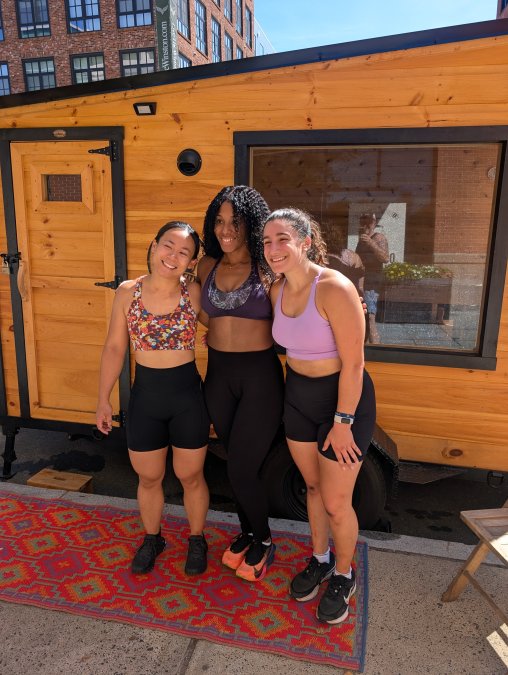
Athletes relaxing by a wood-fired sauna and cold plunge to learn how to recover after intense training
How Hot and Cold Exposure Works Together
Heat raises blood flow and relaxes muscle tissue, easing tightness after heavy sessions. Cold immersion reduces inflammation and numbs sore spots. The back-and-forth supports parasympathetic activity, so you leave calmer than you arrived.
Setting Up a Contrast Therapy Ritual at Home
A workable home protocol looks like this:
- Warm up in the sauna or hot water for 10 to 15 minutes.
- Move to cold immersion for 1 to 3 minutes.
- Return to heat for another 10 minutes.
- Finish on cold, then rest for 10 minutes.
- Repeat the cycle two to three times, two or three days per week.
Steam City Sauna delivers a wood-fired sauna trailer and cold plunge to your space, sets everything up, and handles takedown, which removes the logistics that usually kill a recovery routine.
How Long to Sauna After Workout: Timing That Actually Works
For most athletes, 10 to 20 minutes in a sauna after training is the sweet spot. Go longer and you risk dehydration and a blood-pressure drop that leaves you dizzy rather than restored. Right after a hard session your body is already stressed, so short beats long.
Wait 20 to 30 minutes after training before stepping in, and rehydrate first. If you trained heavy for hypertrophy, some evidence suggests intense heat immediately post-session can blunt the muscle-building response, so many lifters save the sauna for the evening or a rest day. For endurance work, post-session heat is generally fine.
Cold Plunge Recovery Time: What to Expect
Cold plunge recovery time typically runs 1 to 3 minutes per immersion. Longer is not better, the point is triggering the vascular response, not proving toughness. Water around 50 to 59 degrees Fahrenheit works for most people; colder is not automatically more effective.
Expect an initial gasp and a strong urge to get out. Breathe slowly and stay for the full window; afterward your skin flushes and you feel alert. Avoid cold immersion right after a strength session if building muscle is the priority, since it can dampen the inflammatory signals that drive adaptation.
Post-Workout Nutrition Timing for Faster Repair
Post-workout nutrition timing centers on a simple window: eat within 60 to 90 minutes of finishing, prioritizing protein plus carbohydrates. That combination supports muscle protein synthesis (MPS), the process that rebuilds broken-down tissue, and restores burned glycogen. You need not sprint to a shaker the second you rack the weights, but don’t wait until dinner either.
The Science of Muscle Protein Synthesis
MPS is the mechanism behind every recovery claim here. Hard training creates micro-tears and depletes glycogen; in response, your body raises MPS for roughly 24 to 48 hours, with the sharpest spike in the first few hours. Two levers control it:
- Leucine, an essential amino acid. Leucine acts as the trigger for MPS. A dose of roughly 2 to 3 grams of leucine, the amount in about 20 to 40 grams of high-quality protein, is a common threshold practitioners cite for maximizing the response in a single meal.
- Total daily protein. Per-meal timing matters less than hitting a daily target. A widely used range is 1.6 to 2.2 grams of protein per kilogram of body weight per day for hard-training athletes, spread across three to five meals of 0.3 to 0.4 grams per kilogram each.
This is why the “anabolic window” is wider than the old 30-minute myth suggested. If you ate protein within a few hours before training, you are topping up a process already running, not racing a clock.
What to Eat in the First Two Hours
Aim for a mix of complete protein and fast-digesting carbs. Practical options include:
- Greek yogurt with berries and honey
- A chicken or tofu rice bowl
- A protein shake blended with a banana and oats
- Eggs with toast and fruit
Protein supplies amino acids for tissue repair; carbohydrates blunt cortisol and refill glycogen. Many athletes find a roughly 3-to-1 carb-to-protein ratio works after endurance sessions, closer to 2-to-1 after strength work. If you train twice in a day, the post-session meal matters more, you are refueling for the next bout, not just repairing the last.
Hydration and Electrolytes After Sweating
Replace what you lost. Weigh yourself before and after training: each pound lost is roughly 16 to 24 ounces of fluid to replace. Plain water covers short sessions, but if you sweated heavily or trained over an hour, add electrolytes, especially sodium and potassium. Cramps and next-day fogginess often trace back to sodium loss, not just dehydration.
Supplements: What the Evidence Actually Supports
Most recovery supplements are marketing. A short list has real backing:
- Creatine monohydrate. The most studied sports supplement. A common protocol is 3 to 5 grams per day, taken any time, timing is not critical. It supports strength and lean mass rather than “recovery” in the soreness sense, but it earns its place.
- Caffeine. A performance aid, not a recovery one. It masks fatigue, so don’t lean on it to push through a red-flag recovery day.
- Tart cherry and other polyphenols. Some athletes report reduced soreness around hard sessions. Evidence is mixed and effects modest at best.
- Omega-3s. Commonly cited for joint and inflammatory support. Reasonable in the diet; not a shortcut around sleep and protein.
- BCAAs. Largely redundant if you hit your daily protein target, since complete protein contains the same amino acids.
For hydration guidance grounded in sports science, the American College of Sports Medicine position stands are a solid reference.
Sleep, Active Recovery, and Mobility Work
Sleep is the single most powerful recovery tool you have. Most tissue repair and hormonal restoration tied to training happens during deep sleep, and cutting it short undermines everything else here. Seven to nine hours is the target for hard-training athletes, with a consistent bedtime.
Active recovery means light movement on off days: an easy walk, a swim, a slow bike ride, blood flow without added fatigue. Pair it with mobility work to address stiffness after heavy loading.
- Foam rolling: 5 to 10 minutes on major muscle groups
- Static stretching: hold each position 30 to 60 seconds
- Dynamic mobility: leg swings, hip circles, shoulder rotations
Tracking Recovery: Metrics That Matter
You cannot manage what you do not measure. The most useful metrics are the ones you collect without extra effort: resting heart rate, heart rate variability (HRV), sleep duration, and a subjective soreness score. Most recovery guides stop at “listen to your body” and never say what to do with the numbers. This section does.
The Four Metrics Worth Tracking
Resting heart rate (RHR). Measure it first thing in the morning, before getting out of bed. A reading 5 to 7 beats per minute above your normal for two or more consecutive days is one of the most reliable early signals that your nervous system has not fully recovered. Most wearable rings and watches capture this overnight.
Heart rate variability (HRV). HRV reflects beat-to-beat variation in your pulse and proxies parasympathetic (rest-and-digest) activity. Higher is generally better for a given individual, but your personal trend matters far more than the absolute number. A reading 15 to 20 percent below your 7-day rolling average for several days is a common flag for accumulated fatigue.
Sleep duration and efficiency. Total sleep time tells you how long you were out; sleep efficiency (time asleep divided by time in bed) tells you how well you stayed there. Most hard-training athletes do well above roughly 85 percent efficiency. If it drops, the culprit is usually late caffeine, alcohol, or a too-warm bedroom, not training load.
Subjective soreness and readiness. A simple 1-to-5 soreness score per muscle group, logged each morning, catches what wearables miss. Joint pain, mood, and motivation are legitimate data. Subjective scores often fall before HRV does, making them an early-warning system rather than a lagging one.
How to Turn the Numbers Into a Decision
The point of tracking is a go / modify / rest call, not a prettier dashboard. A workable framework:
- Green (HRV within normal range, RHR at baseline, soreness 1-2): train as planned.
- Yellow (HRV 10-15 percent below baseline, RHR up 3-5 bpm, soreness 3): keep the session but cut volume by roughly 20 to 30 percent, or swap intensity for technique work.
- Red (HRV more than 15-20 percent below baseline for 2+ days, RHR up 5+ bpm, soreness 4-5): replace the session with active recovery, an easy walk, a swim, or mobility work, and prioritize sleep and food.
Psychological Recovery: The Metric Most Guides Ignore
Mental fatigue and chronic stress raise cortisol, slowing tissue repair and blunting the training response. This is the “weightlifting blues” many lifters hit after a heavy block: motivation drops, sleep gets shallow, easy sessions feel like a grind. It is not weakness, it is central nervous system fatigue showing up as mood.
Practical counters that cost nothing:
- Deload weeks every 4 to 8 weeks. Cut volume by 40 to 50 percent while keeping some intensity. Most athletes return stronger, not weaker.
- Screen-free recovery. A 20-minute sauna session or a quiet walk without a phone lowers sympathetic drive in a way a scroll session does not.
- Sleep consistency over sleep perfection. A fixed wake time does more for circadian rhythm than chasing an extra 30 minutes.
- Name the stressor. Journaling two or three sentences about what is actually draining you often reveals that the fatigue is life stress, not training stress, and the fix is different.
Age-Specific Recovery: Adjust the Plan, Not the Goal
Recovery needs shift meaningfully across decades, and generic templates ignore this.
- Ages 20-30: tissue repair is fast, so the main risks are under-sleeping and under-eating. Most athletes in this bracket can handle 4 to 6 hard sessions per week with one full rest day.
- Ages 30-40: recovery between hard sessions lengthens noticeably. A common pattern is needing 48 hours rather than 24 between high-intensity efforts, plus more deliberate warm-ups.
- Ages 40-50: sleep quality and hormonal recovery decline, so total sleep and protein intake matter more, not less. Many athletes find that two hard sessions per week plus three moderate ones beats four hard sessions.
- Ages 50+: joint and connective tissue recovery lags muscle recovery. Mobility work, longer warm-ups, and spacing heavy loading further apart become non-negotiable rather than optional.
The through-line: as you age, protect sleep and protein first, then add recovery tools. Gadgets cannot outrun a 6-hour night.
Common Recovery Mistakes to Avoid
The biggest mistake is treating recovery as passive. Rest is part of it, but deliberate practices like contrast therapy, proper post-exercise nutrition, and mobility work actually accelerate repair. Lying on the couch hoping soreness fades is the slowest path back to full output.
Other frequent errors:
- Skipping electrolytes and only drinking water
- Stretching cold muscles aggressively instead of warming up first
- Doing intense cold immersion right after strength training and blunting gains
- Ignoring sleep in favor of more recovery gadgets
- Pushing through overtraining syndrome warning signs
For a fuller picture of how heat and cold exposure support circulation and mood, see the Cleveland Clinic overview of sauna and cold exposure. For hydration guidance grounded in sports science, the American College of Sports Medicine position stands are a solid reference, and the CDC guidance on sleep and health covers why sleep deserves priority over any gadget.
Recovery is not a luxury you squeeze in when training allows. It is the other half of the work, and the athletes who treat it that way keep showing up strong. If you want a recovery ritual without the logistics, Steam City Sauna brings a wood-fired sauna trailer and cold plunge to your backyard, handles white-glove delivery and setup, and supplies the firewood, starter material, and water buckets so your only job is to show up and reset. Get started with Steam City Sauna and turn soreness into your next session’s edge.
Frequently Asked Questions
How quickly can I recover after an intense workout?
Most athletes feel noticeably better within 24 to 48 hours if they combine hydration, protein intake, sleep, and contrast therapy. Delayed onset muscle soreness typically peaks 24 to 72 hours after training. Using a sauna and cold plunge after your session can help reduce soreness and improve circulation, which supports tissue repair. Recovery speed depends on training intensity, age, and how consistently you follow a recovery routine.
Does contrast therapy help with muscle soreness?
Yes. Alternating heat and cold exposure boosts blood flow, which helps clear metabolic waste from muscle fibers and reduces inflammation. The heat relaxes muscles and the cold constricts blood vessels, creating a pumping effect that supports tissue repair. Many athletes find that contrast therapy benefits include less delayed onset muscle soreness and better mobility the next day. A wood-fired sauna paired with a cold plunge makes this easy to do at home.
How long should I wait to sauna after a workout?
Wait at least 15 to 30 minutes after training before entering a sauna. This gives your heart rate and core temperature time to return closer to baseline. For most people, 20 to 30 minutes in the sauna at a comfortable temperature works well. Hydrate before and after.
What is the 3-3-3 rule for gym recovery?
The 3-3-3 rule is a simple framework some gym-goers use: three minutes of light movement, three minutes of stretching, and three minutes of focused breathing after a workout. It is not a scientifically validated protocol, but it serves as a practical reminder to cool down properly. Pairing this with proper post-workout nutrition timing and adequate sleep gives your body the best chance to repair muscle fibers and reduce central nervous system fatigue.