
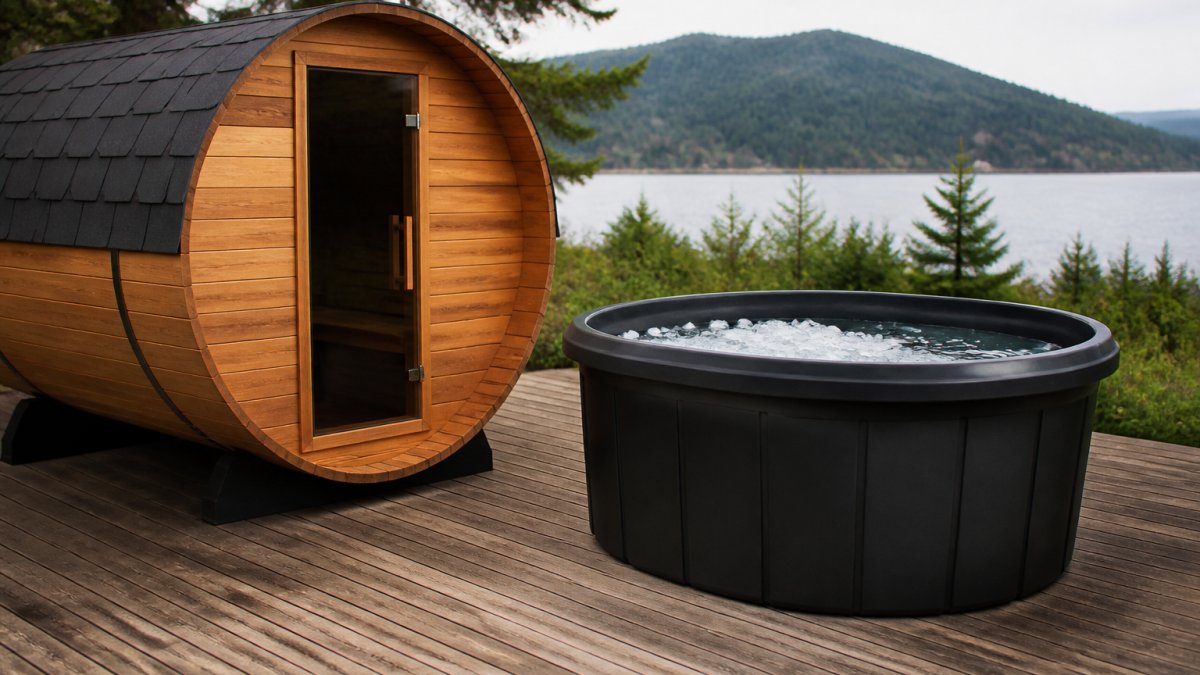
Table of Contents
- Sauna vs Ice Bath Recovery: How Heat and Cold Work Differently
- Sauna or Ice Bath After Workout: What the Evidence Shows
- Sauna Before or After Ice Bath: Session Order and Contrast Therapy
- Cold Plunge After Strength Training: What to Know About Muscle Growth
- How Long to Stay in an Ice Bath for Recovery
- Recovery Outcomes by Workout Type and Training Goal
- Safety, Screening, and Stop Signals for Hot and Cold Therapy
- Conclusion
- Frequently Asked Questions
Last Updated: October 5, 2026
Sauna vs Ice Bath Recovery: How Heat and Cold Work Differently
Sauna vs ice bath recovery comes down to two opposite signals: heat opens blood vessels and relaxes tissue, while cold narrows vessels and calms irritated nerves.
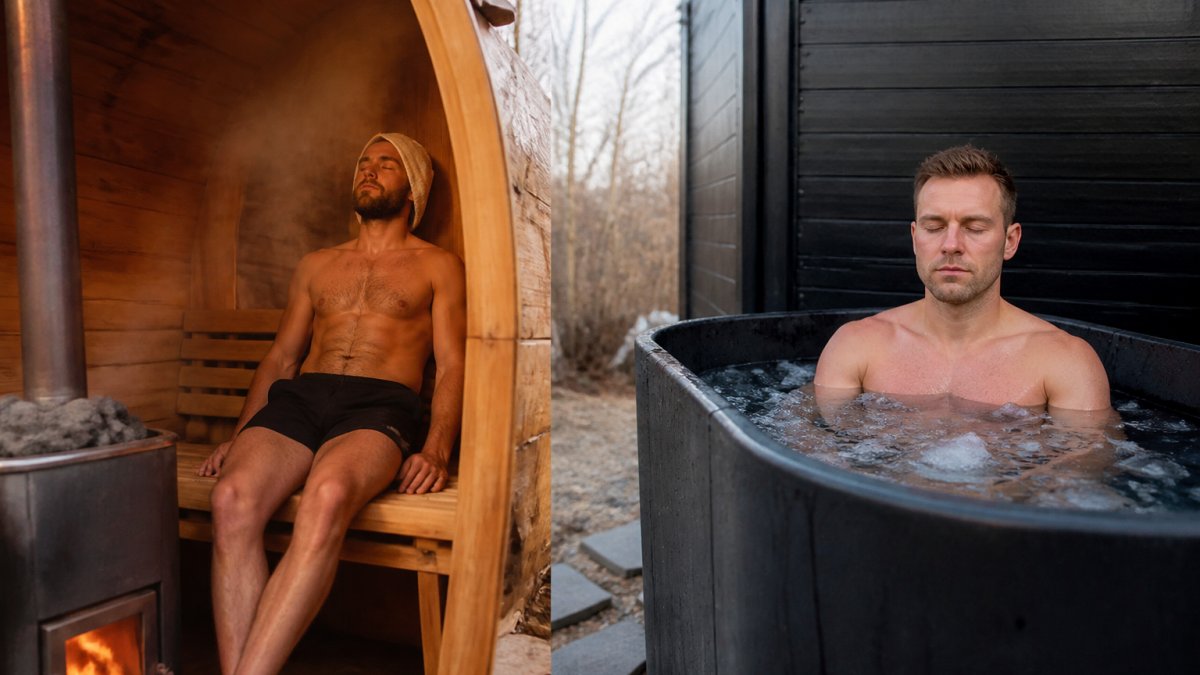
Here at Steam City Sauna, we rent wood-fired saunas and cold plunges for exactly this reason.
Heat raises skin and muscle temperature, increasing blood flow and helping tissue feel looser.
So the real question isn’t which one wins. It’s which one fits the goal you have today.
Sauna or Ice Bath After Workout: What the Evidence Shows
The research is thinner than the marketing suggests, and quality varies by claim.
Well-established:
- Passive heat from a sauna raises skin and core temperature, increases blood flow to the skin, and produces a measurable cardiovascular response similar in shape to light exercise.
- Cold water immersion reliably reduces the perception of soreness in the days after strenuous exercise, especially when water is in the 50 to 59 degrees Fahrenheit range.
- Both heat and cold exposure trigger a nervous-system response that most people describe as mood-lifting or calming, depending on which one is used.
Reasonably supported but not settled:
- Sauna use is associated with better cardiovascular outcomes in large observational studies, but observational data cannot prove cause.
- Cold water immersion may slightly reduce next-day strength loss after heavy resistance training, though results across studies are mixed.
- Contrast therapy, alternating heat and cold, may improve how recovered people feel, but the effect on actual performance markers is inconsistent.
Preliminary or overstated:
- Claims that a specific sauna or plunge protocol “flushes toxins” or “detoxifies” tissue are not supported by physiology. The liver and kidneys handle that work.
- Claims that cold plunging accelerates muscle growth are the opposite of what most evidence suggests.
- Claims that one method is universally superior for recovery ignore that the outcome depends on the workout, the goal, and the timing.
Direct head-to-head comparisons of sauna versus cold water immersion are rare.
A practical way to read the evidence:
- If a claim comes from a single small study, treat it as a hypothesis, not a rule.
- If a claim is repeated across multiple independent studies with similar protocols, it is worth building a routine around.
- If a claim comes only from a brand, a coach with something to sell, or a social post, look for the underlying study before changing your training.
PubMed search for sauna and cold water immersion recovery studies
If you want a single rule: pick the method that matches your symptom and your goal, and hold the claims loosely until the evidence catches up.
What Sauna Does After Training
A sauna session raises your core temperature and widens blood vessels near the skin.
Typical protocols studied in the literature run about 10 to 20 minutes per session at temperatures around 160 to 194 degrees Fahrenheit, often two to four times per week.
The trade-off: heat is not a painkiller. A sauna may feel good after a brutal leg day without doing much for the ache itself.
What Cold Water Immersion Does After Training
Cold water immersion means submerging your body in cold water, usually 50 to 59 degrees Fahrenheit, to reduce blood flow at the surface and calm irritated tissue.
Typical protocols studied run about 1 to 3 minutes per immersion, sometimes up to 10 minutes in colder research settings, but longer is not automatically better.
Cold also triggers a strong sympathetic nervous-system response, the sharp inhale, racing pulse, alertness, which is why some people use it in the morning rather than at night.
Match the tool to the symptom. Sore and achy? Cold. Stiff and tight? Heat. Wired and can’t sleep? Heat. Foggy and need to wake up? Cold.
Sauna Before or After Ice Bath: Session Order and Contrast Therapy
Sauna first, cold second is the standard order for contrast therapy. Heat opens blood vessels and loosens tissue; cold narrows them again and leaves most people feeling alert and refreshed.
Flip the order and the effect changes. Cold first wakes you up, then heat relaxes you. That sequence works better before bed.
A simple contrast routine:
- Sit in the sauna for 10 to 15 minutes
- Move to the cold plunge for 1 to 3 minutes
- Repeat two to three rounds
- Finish with whichever temperature matches your goal
Finish on cold if you want to feel sharp and awake. Finish on heat if you want to wind down before sleep. The last exposure sets the tone.
Cold Plunge After Strength Training: What to Know About Muscle Growth
Cold plunge after strength training can work against you if muscle growth is the goal. Cold exposure may blunt the inflammatory signals that help muscle adapt and grow after lifting, a real cost for a lifter chasing size (pubmed.ncbi.nlm.nih.gov).
Here’s how we’d think about it:
- Chasing size: skip the cold plunge right after lifting. Save it for rest days.
- Chasing performance: cold is fine if you need to recover fast for the next session.
- Chasing general wellness: use either, whenever it feels good.
Cold too soon after a hypertrophy session can dull the very response you trained for.
How Long to Stay in an Ice Bath for Recovery
The typical ice bath range is 1 to 3 minutes at 50 to 59 degrees Fahrenheit. Beginners should start at the short end and build up, longer is not automatically better, and staying past comfort adds risk without clear benefit.
A few practical notes:
- Start with 1 minute and add time as you adapt
- Keep water between 50 and 59 degrees for most recovery goals
- Get out if you feel numb, dizzy, or short of breath
Jumping into cold water alone is a real risk. Cold shock can spike your heart rate and breathing in seconds. Always have someone nearby and never plunge solo in open water.
Recovery Outcomes by Workout Type and Training Goal
Different workouts call for different recovery tools, and timing matters as much as the tool. Matching the method to the session, and the adaptation you are protecting, is where most people leave results on the table. Here is a goal-by-goal breakdown. Integrating these modalities into a structured routine often requires navigating the evolving landscape of muscle recovery tech to ensure that your chosen hardware aligns with your specific physiological demands.
Strength and Muscle Growth
For size or maximal strength, cold water immersion right after lifting can blunt the inflammatory and signaling response that drives adaptation. Most coaches say skip the plunge for at least 6 to 8 hours after a hypertrophy or strength session, and preferably save it for a rest day.
- Protocol: Sauna 10 to 15 minutes at 160 to 180 degrees Fahrenheit, 2 to 3 times per week on non-lifting days or several hours after lifting.
- Avoid: Cold immersion within 6 to 8 hours of a session you want to adapt from.
- Why: Heat supports circulation and relaxation without suppressing the training response.
Endurance and Long Cardio
Endurance athletes have the strongest case for cold water immersion. After long runs, rides, or rows, cold water can reduce soreness and help you feel ready for the next session sooner, without erasing endurance adaptations the way it may interfere with strength ones.
- Protocol: Cold immersion 1 to 3 minutes at 50 to 59 degrees Fahrenheit within 30 to 60 minutes of finishing, or a sauna session 10 to 20 minutes at 160 to 180 degrees Fahrenheit later in the day.
- Timing: Use cold when the next hard session is within 24 hours; use heat when you have more recovery time.
- Why: Cold eases acute soreness fast; heat supports broader circulation and relaxation.
Competition Day and Multi-Event Days
On game day or during a multi-event tournament, the priority shifts from adaptation to readiness. Contrast therapy, alternating heat and cold, is the common choice because it leaves athletes feeling fresh without the deep fatigue of a long sauna or plunge.
- Protocol: 3 to 4 minutes hot, 1 minute cold, repeated 3 to 5 rounds, finishing on cold if you need to feel sharp.
- Timing: Finish at least 30 to 60 minutes before the next event so your core temperature and heart rate settle.
- Why: Short rounds avoid the fatigue of a full session while still giving the circulatory and nervous-system benefits.
Skill and Technique Work
Low-load, high-focus sessions, technique drills, mobility work, film review, respond better to whichever method matches your mental state. Heat for relaxation and loosening; cold for alertness and a reset.
- Protocol: Sauna 10 to 15 minutes if you feel tight or sluggish; cold immersion 1 to 2 minutes if you feel foggy or flat.
- Why: The goal here is state change, not tissue repair.
Rest Days
Rest days are the safest window for either method, and the best time to try contrast therapy without worrying about blunting an adaptation.
- Protocol: Either a full sauna session (15 to 20 minutes) or a contrast routine (3 to 4 rounds), depending on how you want to feel afterward.
- Why: No training response to protect, so you can use the tool that feels best.
| Goal | Best First Choice | Sample Protocol | Watch Out For |
|---|---|---|---|
| Muscle growth | Sauna | 10-15 min at 160-180°F, 2-3x/week | Skip cold within 6-8 hours of lifting |
| Endurance recovery | Ice bath | 1-3 min at 50-59°F within 30-60 min | Don’t extend past comfort |
| Next-day performance | Contrast therapy | 3-4 min hot / 1 min cold, 3-5 rounds | Finish 30-60 min before competing |
| Skill and technique | Either | 10-15 min sauna or 1-2 min cold | Match to mental state, not soreness |
| Rest day | Either | Full sauna or full contrast routine | Hydrate before and after |
The tool follows the goal. Protect strength adaptations by keeping cold away from the post-lifting window. Use cold when you need to bounce back fast. Use heat when you want to relax and support circulation.
Safety, Screening, and Stop Signals for Hot and Cold Therapy
Both heat and cold carry real risks, so screen yourself first. People with heart conditions, high or unstable blood pressure, or circulatory problems should check with a doctor before either method, cold water is especially hard on the heart.
Stop right away if you notice:
- Chest pain, pressure, or a racing heartbeat
- Dizziness, confusion, or feeling faint
- Numbness that doesn’t fade after you warm up
- Trouble breathing or a deep chill you can’t shake
Heat and cold are tools, not cures. The people who get the most from them screen themselves first, keep sessions short, and hydrate before and after.
Hydration matters more than most people think. Heat makes you sweat, and cold can mask how much fluid you’ve lost. Drink water before and after either session.
Conclusion
The sauna vs ice bath recovery debate has no single winner. Heat helps you relax, supports circulation, and suits growth-focused training.
That’s where we come in. Steam City Sauna brings a wood-fired sauna trailer and a cold plunge straight to your space, with white-glove delivery and setup.
Book a rental with Steam City Sauna and build a recovery routine that fits your training.
Frequently Asked Questions
What is better for recovery after a workout, a sauna or an ice bath?
It depends on your goal. A sauna supports circulation, relaxation, and sleep quality, which helps overall recovery. An ice bath is better for reducing acute muscle soreness and inflammation right after intense training. For strength athletes focused on muscle growth, cold water immersion immediately after lifting may blunt training adaptations, so a sauna or waiting several hours before cold exposure is often the better call.
What should I do first, a sauna or an ice bath?
Most contrast therapy protocols start with heat, then cold. A typical session might be 10 to 15 minutes in the sauna followed by 1 to 3 minutes in cold water, repeated two to three times. Ending with cold is common for reducing inflammation and feeling alert. If your goal is relaxation and sleep, ending with the sauna may work better for you.
How long should you stay in an ice bath for recovery?
Research on cold-water immersion for recovery typically uses water between 50 and 59 degrees Fahrenheit. Beginners should start with 1 to 2 minutes and build up gradually. Always have someone nearby. If you feel numbness, confusion, or uncontrollable shivering, get out immediately.
Is it safe to alternate between a sauna and an ice bath?
Alternating hot and cold is generally safe for healthy adults, but it puts significant stress on your cardiovascular system. Skip contrast therapy if you have heart conditions, uncontrolled high blood pressure, or are pregnant. Always consult your doctor first. Stay hydrated, keep sessions short, and stop if you feel dizzy or lightheaded.